Introduction
The 5th Seal – persecution, the ‘souls’ of the martyrs which is “Proof text” for “immortality of the soul” & “heaven” as destiny of righteous, but is this correct? I.e. That the souls mentioned are in heaven and they dead people are crying out.
It is assumed that this portion of scripture is literal when the preceding 4 seals have been metaphorical with the 4 horses standing for different types of judgement and destruction. We know that these are not literal horses.
Revelation 6:9-11 When He opened the fifth seal, I saw under the altar [1] the souls [2] of those who had been slain for the word of God and for the testimony which they held.
(10) And they cried with a loud voice [3], saying, “How long, O Lord, holy and true, until You judge and avenge our blood on those who dwell on the land[4]?”
(11) Then a white robe was given to each of them; and it was said to them that they should rest [5] a little while longer, until both the number of their fellow servants and their brethren, who would be killed as they were, was completed [6].
Verse 9 Souls Under the Alter
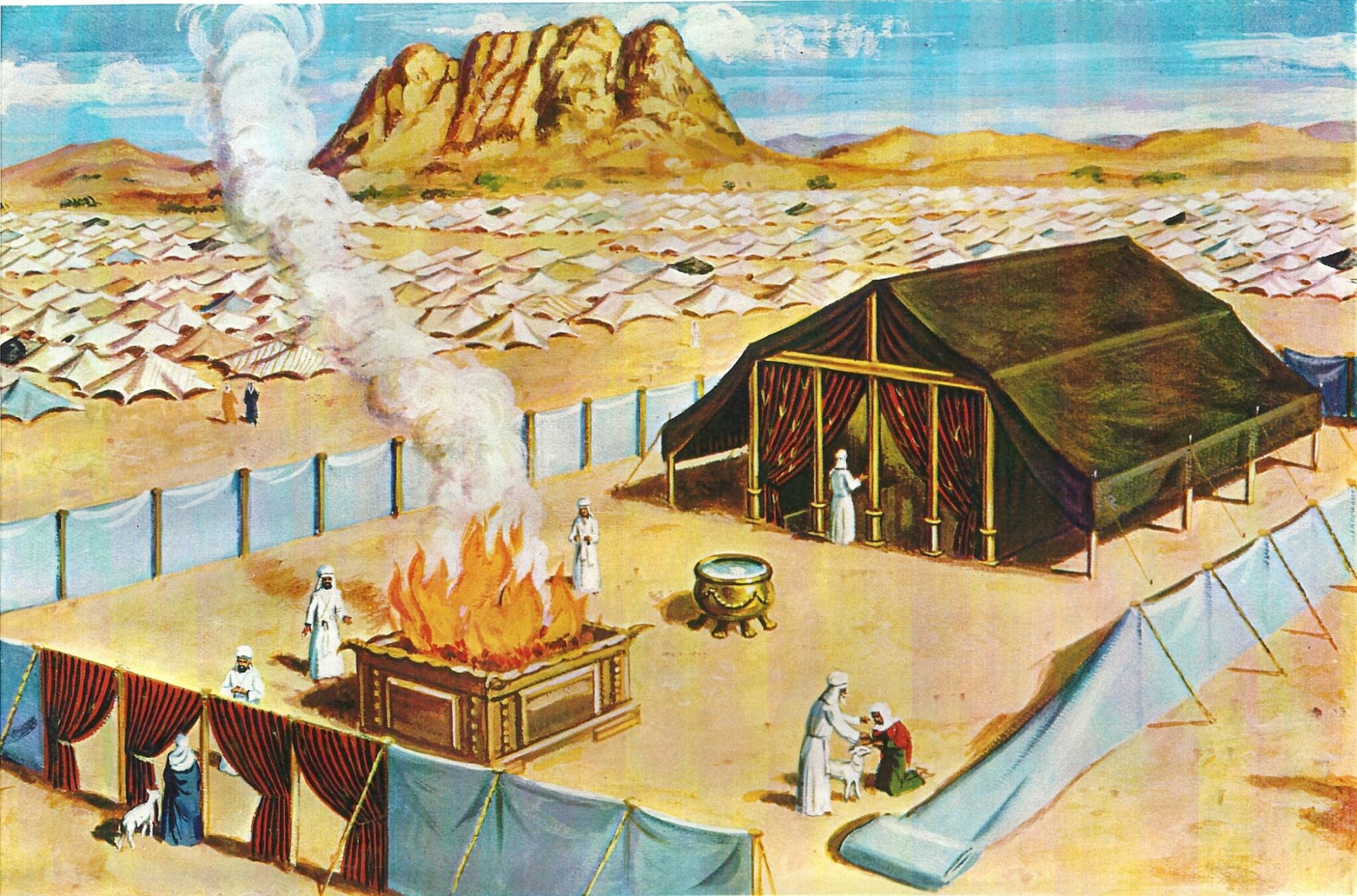
The first issue is that the altar is assumed to be in heaven and the “Souls” is assumed to be “spirits,” but no explanation for why they are “under the altar.”
[1] The altar of sacrifice is not in heaven, but outside the Temple, the place of killing, not to be confused with the “golden altar” of incense Revelation 8:3.
The altar mentioned here is the bronze altar of sacrifice which was outside the Temple. In Hebrews 9:11-15, 23-28, Jesus is portrayed as the once-for-all sacrifice, shedding His blood on the land but afterwards entering the celestial Temple with His own blood, just as the High Priest entered the Holy of Holies on Yom Kippur. In Temple imagery, the martyrs follow in Jesus’ footsteps, shedding their blood on the bronze altar (on the land).
The blood both man and beast is called their “souls” .
When you translate the Hebrew Nephesh to soul and not life in the following then the scriptures make more sense.
The word for “souls” is blood, both man and beast (Genesis 9:4-5; Leviticus 17:11-14).
Genesis 9:4-5 But you shall not eat flesh with its soul (life), that is, its blood. (5) Surely for your soul(life) blood I will demand a reckoning; from the hand of every beast I will require it, and from the hand of man. From the hand of every man’s brother I will require the soul (life) of man.
Leviticus 17:11-14 For the soul(life) of the flesh is in the blood, and I have given it to you upon the altar to make atonement for your souls; for it is the blood that makes atonement for the soul.’
12 Therefore I said to the children of Israel, ‘No one among you shall eat blood, nor shall any stranger who dwells among you eat blood.’
13 “Whatever man of the children of Israel, or of the strangers who dwell among you, who hunts and catches any animal or bird that may be eaten, he shall pour out its blood and cover it with dust;
14 for it is the soul(life) of all flesh. Its blood sustains its life. Therefore I said to the children of Israel, ‘You shall not eat the blood of any flesh, for the soul(life) of all flesh is its blood. Whoever eats it shall be cut off.’
Jesus offered His own “soul” as a sacrifice for our sins Isaiah 53:10-12.
Animal sacrifices were killed in the Temple courtyard by having their throats cut, and the ψυχὴ (soul/blood) was caught and poured out at the base of the altar (Leviticus 4:7,18,34; Leviticus 5:9). Thus, the “soul/blood” belonging to the martyrs is portrayed as “under the altar.”
Verse 10 The “souls/bloods” call out to God for vengeance
[3] Jesus portrayed Abel as the prototype martyr (Luke 11:50-51).
The soul/blood of Abel – the prototype martyr – called out to God from the ground to be avenged (Genesis 4:10-11). This same symbolic imagery is being applied to all of the martyrs. The sense is the same as with Abel’s blood crying out to God, that God remembers the injustice and will avenge His holy ones, and will restore them to life through resurrection.
Luke 11:50-51 that the blood of all the prophets which was shed from the foundation of the world may be required of this generation, 51 from the blood of Abel to the blood of Zechariah who perished between the altar and the temple. Yes, I say to you, it shall be required of this generation.
[4] Not only does Scripture symbolically portray the blood of Abel calling out to be avenged, but also in Ezekiel 37:11 the dry bones of the patriarchs and the whole house of Israel cry out from their graves for the fulfilment of the promise of resurrection and eternal inheritance. “Then He said to me, ‘Son of man, these bones are the whole house of Israel.
They indeed say, “Our bones are dry, our hope is lost, and we ourselves are cut off!” Therefore prophesy and say to them, “Thus
says the Lord GOD: ‘Behold, O My people, I will open your graves and cause you to come up from your graves, and bring you
into the land of Israel.’” (Ezekiel 37:11-12). Such allegorical language does not mean that blood or bones actually speak.
Rather, these things reinforce the idea that God will never forget to avenge the blood of His servants or forget His promises of the inheritance to His people.
Verse 11 God’s Response
White robes given to them, “wedding garments” (Matthew 22:11-14; Revelation 19:7)
[5] Death for the righteous is portrayed as “sleep” both in the Old Testament (Daniel 12:2) and the New Testament (Luke 8:52; John 11:11-14; 1 Cor. 15:51; 1 Thessalonians 4:14, Revelation 14:13). They must “rest/sleep” a little longer
Their number must be completed, more martyrs to be slain by the Beast during the last 3.5 years of the Tribulation. These martyrs are resurrected and then reign (Revelation 20:4-6)
[6] Persecution and martyrdom of Jesus’ followers was also described by Jesus in the Olivet Discourse, (Matthew 24:9-13).
Below is the teaching on Revelation 6:9-11 done by Tim Warner of 4windsfellowships.net
 Living as a Christian in this World