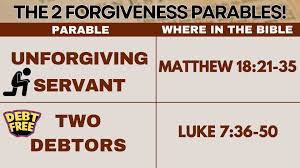
The Unmerciful or Unforgiving Servant Matthew 18:21-35

After a person has been forgiven, they need to forgive. In one of his most devastating parables, Jesus taught that forgiveness can be forfeited and cancelled! It is often called ‘The Unmerciful Servant’ (Matthew 18:21-35). The King who reimposed his courtier’s debt and prison sentence after learning that he refused to exercise the same leniency … Continue reading The Unmerciful or Unforgiving Servant Matthew 18:21-35
Forgivess is Powerful and can Lead to Physical Healing

I have a devotional book called declaring God’s Word by Derek Prince which has page for each day of the year. Over the last couple of days the subject has been forgiveness. Derek explains that there are so many benefits to forgiving people and being forgiven. One benefit is actual physical healing which he uses … Continue reading Forgivess is Powerful and can Lead to Physical Healing

Names and Descriptions of the Age to Come in the New Testament

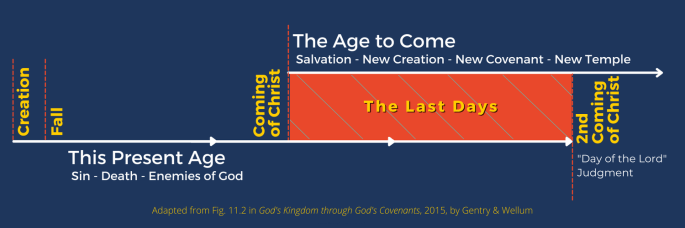
The New Testament speaks of the coming age—the time when God’s redemptive plan reaches its climax—in a variety of rich and interconnected terms. While each highlights a different aspect, they all point toward the same hope: the visible, physical, and glorious reign of the Messiah, the resurrection of the dead, the restoration of all things, … Continue reading Names and Descriptions of the Age to Come in the New Testament

Understanding Patterned Fulfillment: How the Apostles Read Prophecy

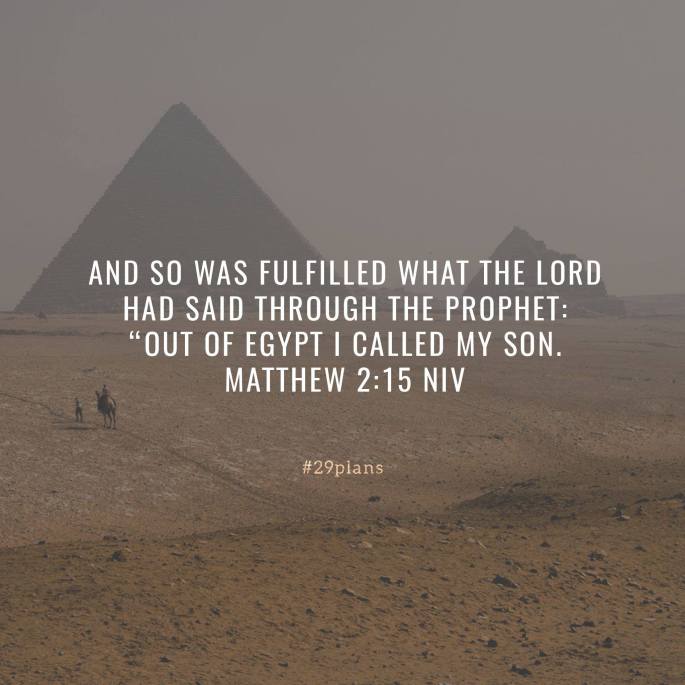
Many Christians today read the New Testament’s use of the Old Testament as though each citation marks the final and exhaustive fulfillment of that prophecy. When Matthew writes, “This was to fulfill what was spoken by the prophet”(Matthew 2:15), or when Peter declares that Pentecost fulfills Joel’s prophecy (Acts 2:16–21), modern readers often assume the … Continue reading Understanding Patterned Fulfillment: How the Apostles Read Prophecy

“Whoever” Individually versus “The Whole” Collectively

The New Testament contains a common, theologically significant, expression which is incorrectly translated in most English versions. This provides false implications which affect more than one theological point. The expression πᾶς + substantive singular participle is translated either as “whoever believes,” , “whoever is born/begotten” (of God, or of the Spirit), or “whoever loves.” 1. The expression πᾶς ὁ πιστεύων (“whoever believes”) appears in … Continue reading “Whoever” Individually versus “The Whole” Collectively

The “Casting Down of the World” and NOT “Foundation of the World” Part 4

We now turn our attention to the only three passages which use the clause πρὸ καταβολῆς κόσμου, “before the casting down of the world.” All three passages place the Son of God prior to whatever this clause actually meant. All three are significant in determining a correct theology concerning the Son of God, whether He was eternally … Continue reading The “Casting Down of the World” and NOT “Foundation of the World” Part 4

The “Casting Down of the World” and NOT “Foundation of the World” Part 3

The Temporal use of ἀπὸ: In part II of this series, I covered the three passages which contain the clause ἀπὸ καταβολῆς κόσμου in which the preposition ἀπὸ is used causally, meaning “because of the casting down of the world.” In this post I would like to address the remaining four passages which have this clause where the … Continue reading The “Casting Down of the World” and NOT “Foundation of the World” Part 3

The “Casting Down of the World” and Not “Foundation of the World” Part 2

The Causal use of ἀπὸ: In part 1 of this series, I pointed out the awkwardness of the noun καταβολῆς (casting down), allegedly meaning “foundation/founding,” and its use in Hebrews 11:11 the only time it appears in the Bible apart from the clause καταβολῆς κόσμου (casting down of the world). In this post I would like … Continue reading The “Casting Down of the World” and Not “Foundation of the World” Part 2

The “Casting Down of the World” and Not “Foundation of the World” Part 1

Thesis: There is a very important clause that appears ten times in the New Testament but is mistranslated in virtually all English versions. This mistranslation gives cover to certain incorrect doctrines, including Calvinism, Trinitarianism, and Unitarianism. The important clause is καταβολῆς κόσμου (pronounced kata-bol-ace kos-moo). It is wrongly translated “foundation of the world” in virtually all English versions. … Continue reading The “Casting Down of the World” and Not “Foundation of the World” Part 1

The Translation of God’s Name from YAHWEH to LORD

One of the most obvious mistranslated, and probably the most common (5321 times), concerns God’s holy Name. In simple terms, instead of transliterating God’s Name, Yahweh, or using its meaning, “I am,” the translators replaced it with the title “LORD.” Some versions use all capitals to differentiate LORD from Lord, but a name is still … Continue reading The Translation of God’s Name from YAHWEH to LORD