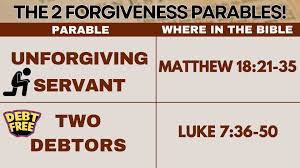
After a person has been forgiven, they need to forgive. In one of his most devastating parables, Jesus taught that forgiveness can be forfeited and cancelled! It is often called ‘The Unmerciful Servant’ (Matthew 18:21-35). The King who reimposed his courtier’s debt and prison sentence after learning that he refused to exercise the same leniency … Continue reading The Unmerciful or Unforgiving Servant Matthew 18:21-35
Tag: bible
Understanding Patterned Fulfillment: How the Apostles Read Prophecy
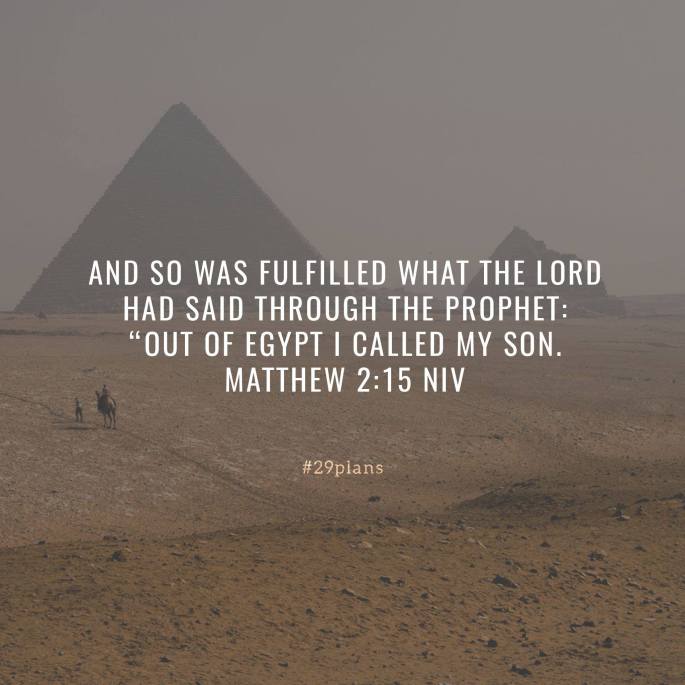
Many Christians today read the New Testament’s use of the Old Testament as though each citation marks the final and exhaustive fulfillment of that prophecy. When Matthew writes, “This was to fulfill what was spoken by the prophet”(Matthew 2:15), or when Peter declares that Pentecost fulfills Joel’s prophecy (Acts 2:16–21), modern readers often assume the … Continue reading Understanding Patterned Fulfillment: How the Apostles Read Prophecy
“Whoever” Individually versus “The Whole” Collectively
The New Testament contains a common, theologically significant, expression which is incorrectly translated in most English versions. This provides false implications which affect more than one theological point. The expression πᾶς + substantive singular participle is translated either as “whoever believes,” , “whoever is born/begotten” (of God, or of the Spirit), or “whoever loves.” 1. The expression πᾶς ὁ πιστεύων (“whoever believes”) appears in … Continue reading “Whoever” Individually versus “The Whole” Collectively
Seven Age Dispensationalism
To say that the appearance of the Scofield Reference Bible in 1909 caused a dramatic change in evangelical Christianity would be an understatement. Many have studied its footnotes with great care, almost giving them an authority equal to the biblical text itself. Anyone who dares raise any question about its teachings is immediately called a “liberal,” … Continue reading Seven Age Dispensationalism
The Abrahamic Inheritance was the Earliest Christian Hope
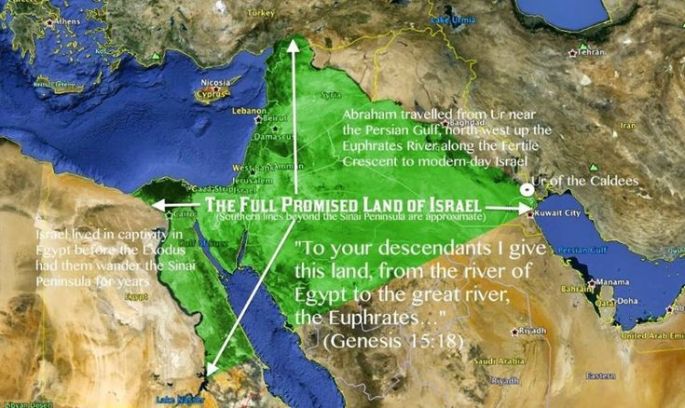
Throughout the bible we see references to the land being an inheritance for Israel as a grouping. Following are just two important post bible era Church Fathers as they are called statements about fulling the Abrahamic covenant which included a very large piece of land in the middle east. Justin Martyr (AD 100-165) Christian apologist … Continue reading The Abrahamic Inheritance was the Earliest Christian Hope
We Dont Pray to Jesus!
The post explains that prayer should be directed to the Father as Jesus instructed, emphasizing worship of Jesus as the Son of God. It highlights the importance of honoring Jesus as the image of God and the reconciler of humanity, stating worship is directed toward the persons of the Father and Son, not abstract divinity.
A Look at the Hebrew Word Olam
The Hebrew word "olam" signifies a distant time or horizon, often misconstrued as "eternity" in English. It encompasses long durations, but lacks a single equivalent for "eternity" in Classical Hebrew. Various applications of olam reveal its context-dependent meanings, limited to a person's lifetime or specific ages rather than infinite time.
Did You Know That Ancient Greek Did Not Have Punctuation?
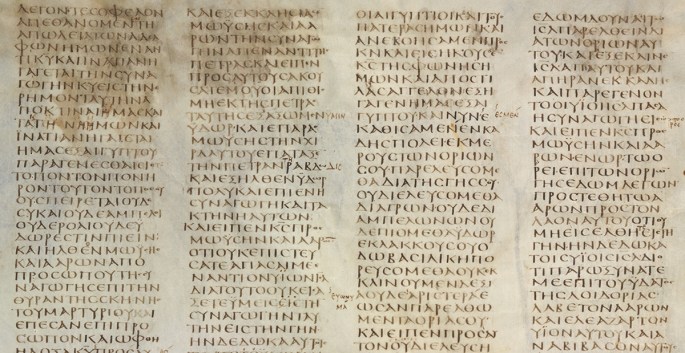
Ancient Greek, particularly during the New Testament period, lacked a formal punctuation system and spaces between words. Written in capital letters, texts relied on reader comprehension. The introduction of punctuation occurred centuries later, leading to varied interpretations in translations, which reflects translators' biases in rendering biblical texts with modern punctuation conventions.
Smith Wigglesworth – Overview Of Ministry
Smith Wigglesworth, known as the Apostle of Faith, was an impactful evangelist who performed miraculous healings and even raised the dead. Born in 1859, he experienced a profound conversion and pursued God relentlessly. His dynamic ministry emphasized faith, purity, and holiness. Wigglesworth's life exemplified godly authority, and he believed in aggressive faith, leaving a legacy that inspires future ministries aimed at revival.
Healing and the Atonement using Key Passages of Scripture
The article by Anthony D. Palma explores the relationship between divine healing and the Atonement through Scripture. It highlights Isaiah 53:4, which indicates that Christ bore our sicknesses and pains. The New Testament quotations affirm this connection, emphasizing healing as part of the redemptive work of Christ. Though the Atonement primarily addresses sin, it also encompasses physical healing, reflecting a holistic salvation for humanity.