It may come as a surprise to many Christians that "Eternal Security" (or once saved always saved) was completely unknown to the Church prior to the development of Calvinism during the Reformation. Even St. Augustine, whose philosophies led to the development of Calvinism, did not hold to "Eternal Security." The Scriptures teach that the believer … Continue reading 5. Perseverance of the Saints – Calvinism
Tag: Calvinism
2. Unconditional Election Calvinism
Calvinists believe God has chosen only certain individuals to be saved, based entirely on His sovereignty. By this they mean that God does not take into consideration any future faith or response to His grace by the individual. Rather, He decides whom He will save completely independently of man's own will. Since mankind is allegedly … Continue reading 2. Unconditional Election Calvinism

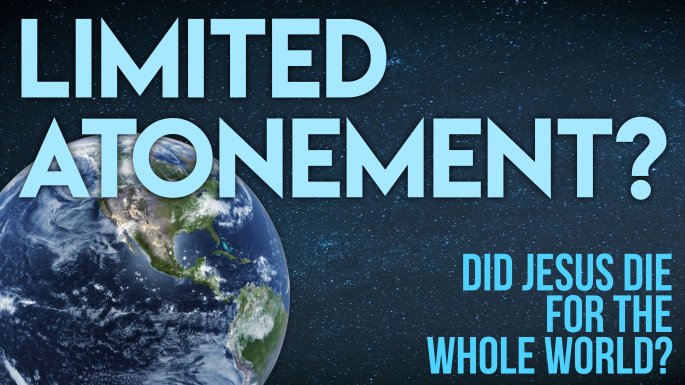
3. Limited Atonement – Calvinism
Calvinists take their theory to the next logical plateau, by claiming the blood atonement of Christ was limited to the elect only. Christ died only for the sins of the elect. If one is not elect, Christ did not die for his sins. Support for this idea is derived from passages that speak of Jesus' … Continue reading 3. Limited Atonement – Calvinism
1. Total Depravity – Calvinism
The Human Condition According to Calvinists The Calvinist view of the human condition is one of complete and utter depravity. They do not deny that man sometimes does things that are good. However, his fallen condition makes it utterly impossible for him to live righteously. He inevitably gives in to his fallen nature inherited from … Continue reading 1. Total Depravity – Calvinism
0. An Introduction to Calvinism
The system known as "Calvinism" (or Reformed Theology) has its roots in the writings of St. Augustine in the 4th century. Church historian, Philip Schaff, documents St. Augustine's beliefs in his introduction to the works of St. Augustine. "Augustin...asserts that divine grace is not conditioned on human worthiness, and maintains the doctrine of absolute predestination, … Continue reading 0. An Introduction to Calvinism