The Gnostics taught that there is a perfect, eternal, invisible, incomprehensible, unknowable, transcendent Aeon[1]. They called him by several names including Proarche, Propator and Bythus (meaning “First Beginning,” “First-Father,” and “Profundity,” respectively). He is also called, The Unknown Father. There are other Aeons, emanating by means of thought directly or indirectly from Bythus, including Christ … Continue reading Bythus and His “Family” _ Gnosticism Part 2

Is Our Destination Heaven?
In the below teaching by Tim Warner, covers the question of what about the righteous saved going to heaven and why it is not taught in the bible contrary to what we have all heard positively taught in western churches. The only Hope in the Old Testament for the Just/Righteous is the resurrection to an … Continue reading Is Our Destination Heaven?
8. The Coexistence of Sovereignty and Free Will – Calvinism Series
God is sovereign, but that doesn't lead to the philosophy of St. Augustine or John Calvin. God chooses to limit His sovereignty in the case of man's free will. He has established a framework of natural laws and spiritual laws. His natural laws include the laws of physics. Everything in the universe obeys God's natural … Continue reading 8. The Coexistence of Sovereignty and Free Will – Calvinism Series

Introduction to Gnosticism – Part 1
Gnosticism comes from the Greek word “gnosis” which means “knowledge.” Knowledge is a great thing. Solomon wrote, “Wise people store up knowledge…” (Proverbs 10:14) and “The simple inherit folly, But the prudent are crowned with knowledge.” (Proverbs 14:18). But there are two kinds of “knowledge.” The Apostle Paul referred to the heresy of Gnosticism as … Continue reading Introduction to Gnosticism – Part 1
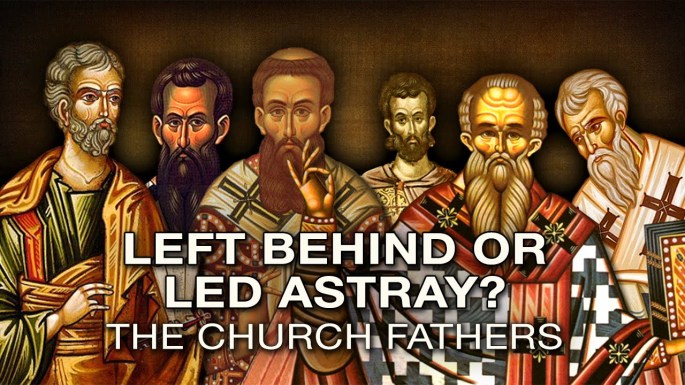
10. Free Will & the Early Church – Calvinism
We stated in the introduction that Calvinism has its roots in the views of St. Augustine. This man was also largely responsible for the acceptance of a-millennialism into mainstream Christianity, and the Roman Catholic doctrine that the Catholic Church is now God's Kingdom on earth. Prior to his conversion in the fourth century, Augustine was … Continue reading 10. Free Will & the Early Church – Calvinism
6. God’s Will – Calvinism
God's will is that believers obstain from fornication. Paul wrote, "For this is the will of God, your sanctification: that you should abstain from sexual immorality; that each of you should know how to possess his own vessel in sanctification and honor, not in passion of lust, like the Gentiles who do not know God; that no … Continue reading 6. God’s Will – Calvinism
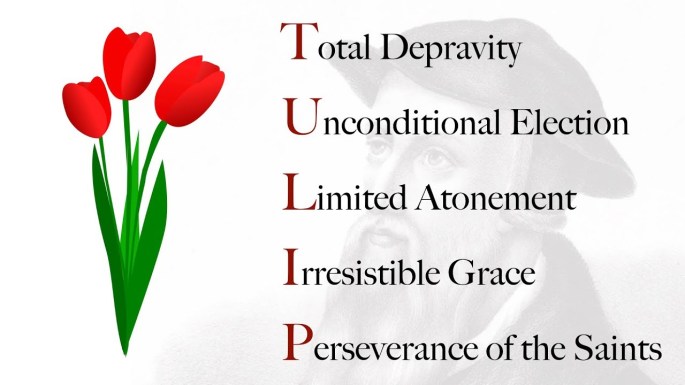
9. Where Calvinism Leads
When the philosophy that drives Calvinism is projected to its logical conclusion, even Satan's activity is an extension of God's sovereignty. God sovereignly controls Satan's every move. This makes God the author of everything evil, and the most wicked sinner of all. Some Calvinists actually admit this, and seek to defend it from Scripture. If … Continue reading 9. Where Calvinism Leads
4. Irresistible Grace – Calvinism
Grace According to CalvinistsCalvinists do not deny that God's grace is given to the non-elect. Everything good is from God. Jesus said that God makes the sun to shine on both the wicked and righteous. Everything good in this world is because of the grace of God. However, Calvinists distinguish between what they call "common … Continue reading 4. Irresistible Grace – Calvinism

5. Perseverance of the Saints – Calvinism
It may come as a surprise to many Christians that "Eternal Security" (or once saved always saved) was completely unknown to the Church prior to the development of Calvinism during the Reformation. Even St. Augustine, whose philosophies led to the development of Calvinism, did not hold to "Eternal Security." The Scriptures teach that the believer … Continue reading 5. Perseverance of the Saints – Calvinism
 Living as a Christian in this World