The Martyrdom Of Polycarp Bishop of Smyrna

THE MARTYRDOM OF POLYCARP or THE LETTER OF THE SMYRNAEANS This revision into modern English is by Richard Neil Shrout, from the translation of J.B. Lightfoot. INTRODUCTIONJohn the Apostle ordained Polycarp bishop of Smyrna, a city north of Ephesus. After a lifetime of ministry, Polycarp was martyred at the age of  86 (eighty-six). This Epistle … Continue reading The Martyrdom Of Polycarp Bishop of Smyrna

Irenaeus Believed All Christians had an Abrahamic Land Inheritance

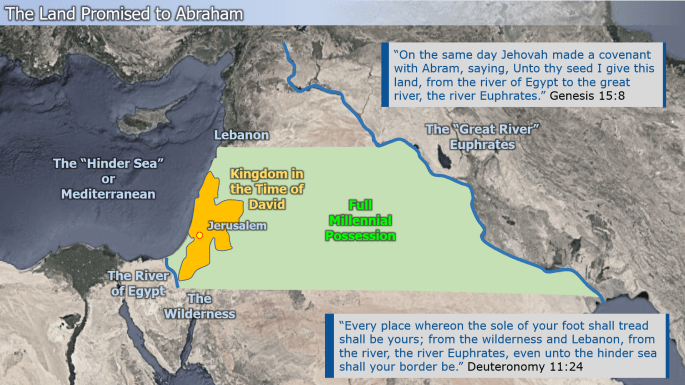
The Early Christians based their hope of inheritance squarely on the permanent and unconditional Land promise of the Abrahamic Covenant. Irenaeus who was a disciple of Polycarp, who was a disciple of John the apostle stated this hope very plainly. Polycarp was appointed bishop of the Church in Smyrna by the Apostles (Irenaeus, Book 3, … Continue reading Irenaeus Believed All Christians had an Abrahamic Land Inheritance

Greek Christians Did Not Understand the Resurrection – 1 Corinthians 15

The Greek mind had great difficulty accepting the concept of the resurrection of the flesh. They had been steeped in Plato’s “immortality of the soul” doctrine and his claim that the flesh was the “prison of the soul,” and that all physical substance was inherently corrupt. To the Greeks, escaping the body of flesh and ascending into the “celestial spheres” as pure “spirit” was the goal. Consequently, the idea of the resurrection of the flesh meant permanent imprisonment in inherently corrupt matter, and permanent confinement to this material creation.

8. The Christology of Sir Isaac Newton – The Evolution of God

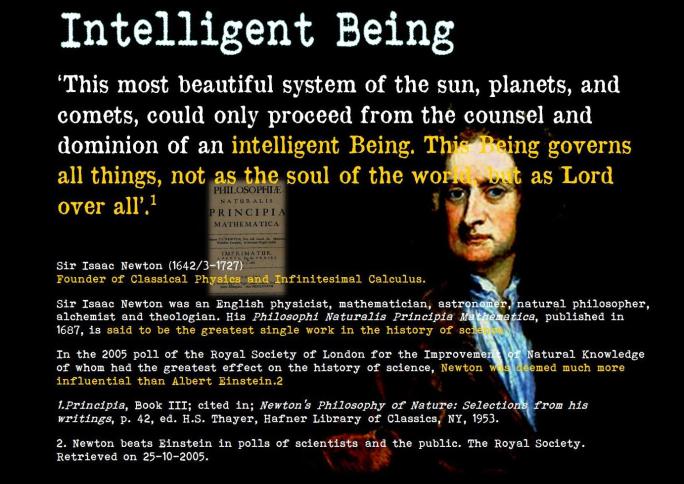
Sir Isaac Newton is acknowledged as one of the most brilliant physicists, historians, and mathematicians of all time. Yet he has been scorned and maligned by Christian theologians for his unorthodox theological beliefs. As professor at Trinity College, Cambridge, Newton was required to be a member in good standing of the Church of England. There … Continue reading 8. The Christology of Sir Isaac Newton – The Evolution of God

What did Irenaeus Believe?

Irenaeus preceded Tertullian as one of the early Christian apologists and defenders of the Pristine Faith against the Gnostic heretics. He was bishop of the church in Lyons, a city of Gaul (France). Irenaeus was a disciple of Polycarp, who had been taught by John the Apostle. He frequently appealed to Apostolic oral tradition in … Continue reading What did Irenaeus Believe?

4. The Early Christian Apologists -Evolution of God

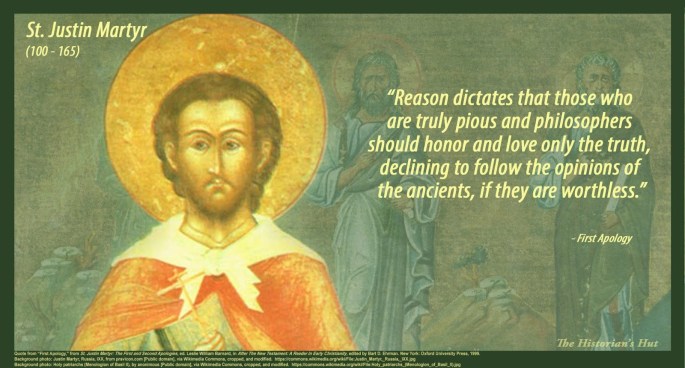
The earliest Christian writers did not only write to interact among themselves (as those mentioned in the previous article). They also interacted directly with the outside world, both with the Jews and with the Greeks and Romans. The greatest of these, who wrote extensively in defence of apostolic Christianity, was Justin Martyr. The term “Martyr” … Continue reading 4. The Early Christian Apologists -Evolution of God

Are Abraham, Isaac, and Jacob alive in Heaven?

Matthew 22:29-32 29 Jesus answered and said to them, "You are mistaken, not knowing the Scriptures nor the power of God. 30 For in the resurrection they neither marry nor are given in marriage, but are like angels of God in heaven. 31 But concerning the resurrection of the dead, have you not read what … Continue reading Are Abraham, Isaac, and Jacob alive in Heaven?

3. Fragments of the Apostolic Fathers – Evolution of God

The earliest Christian writers whose works have survived, those known to have direct connections to the Apostles, were Clement of Rome (disciple of Paul), and Polycarp of Smyrna and Ignatius[1] of Antioch (both disciples of John). These authors had been personally instructed by the Apostles and were leaders within the Christian assemblies established by the … Continue reading 3. Fragments of the Apostolic Fathers – Evolution of God

2. Corruption in Apostolic Times – Nicolaitans and Cerinthus

The corruption of early Christian monotheism emerged during the apostolic age, as warned by Paul and Peter against false teachings infiltrating assemblies. Paul and Jude emphasized the necessity for believers to defend their faith against heresies propagated by figures such as the Nicolaitans and Cerinthus. John, residing in Ephesus, bolstered apostolic teachings through his writings, asserting the unity of Jesus as both Christ and man, countering contemporary heresies and reaffirming Christ's preexistence and incarnation.

1. The Evolution of God Series

1. Foundational Principles of Historical Research The RayOfLight2020 Blog aims to use the below principles developed by 4Winds Fellowships to ensure that doctrines are biblical and consistent with the whole counsel of the bible. These guide the handling of Scripture and provide a cross-check against theological conclusions. The original Scriptures are infallible in the original … Continue reading 1. The Evolution of God Series