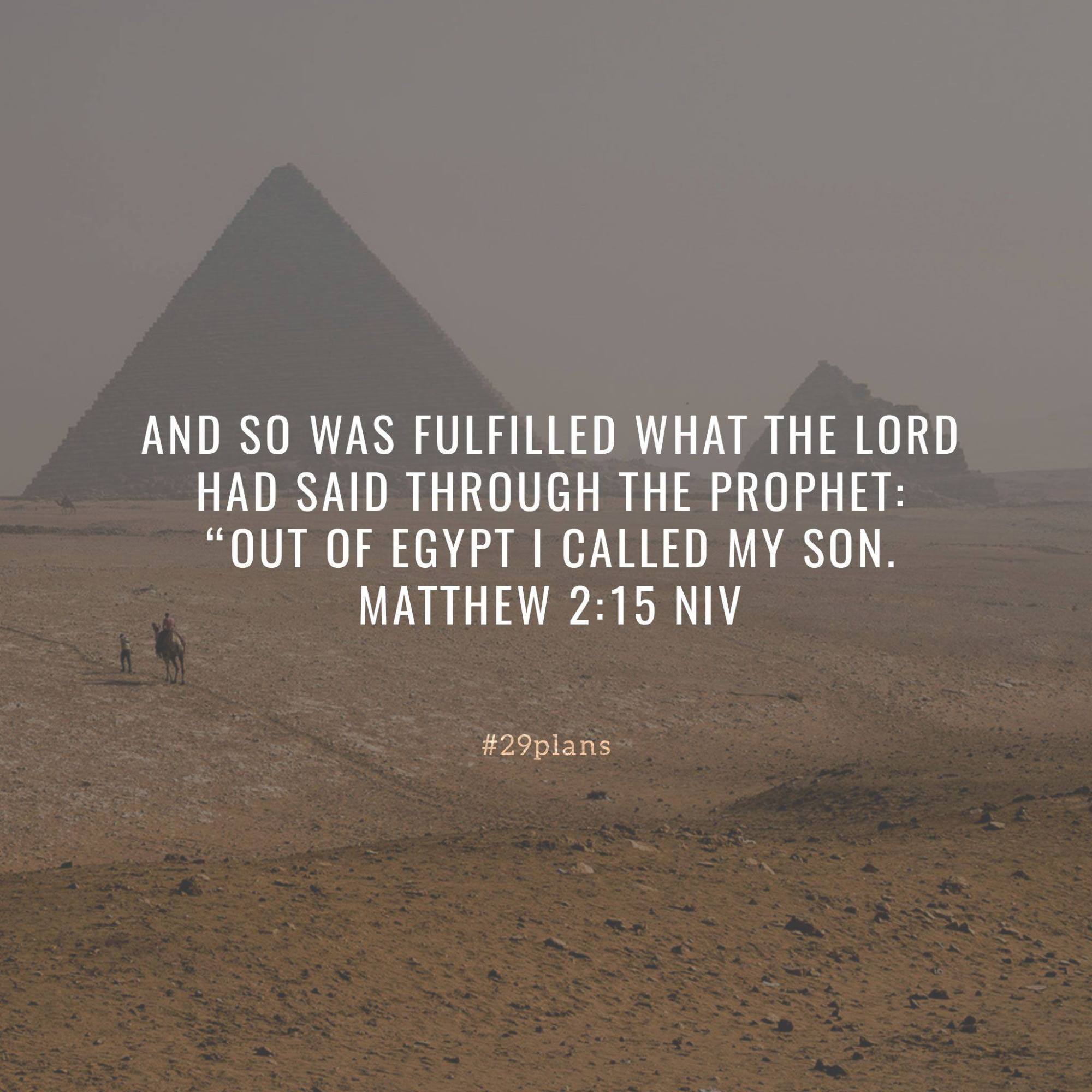
Many Christians today read the New Testament’s use of the Old Testament as though each citation marks the final and exhaustive fulfillment of that prophecy. When Matthew writes, “This was to fulfill what was spoken by the prophet”(Matthew 2:15), or when Peter declares that Pentecost fulfills Joel’s prophecy (Acts 2:16–21), modern readers often assume the matter is closed — prophecy completed, no future expectation remaining.
This flattening of fulfillment has led many to adopt an amillennial or spiritualized hermeneutic, claiming that Old Testament promises to Israel, the Messiah’s kingdom, and the restoration of creation were reinterpreted by the Apostles into “spiritual” realities.
But the Apostles were not redefining God’s promises. They were identifying patterns— recurring divine actions that prefigure the final fulfillment still to come. To understand their hermeneutic, we must recover the framework that shaped their reading of Scripture.
The Biblical Framework: Exodus, Messiah, and Israel’s Final Salvation
The entire story of Scripture unfolds within a recognizable framework of redemptive history:
1. The Exodus as the Foundational Pattern of Salvation.
The deliverance from Egypt became the template for all future acts of redemption. God’s mighty acts in the Exodus—judgment on the oppressor, salvation through blood, and the formation of a covenant people—established the pattern that the prophets repeatedly reused.
“Thus says the Lord, who makes a way through the sea and a path through the mighty waters… Do not call to mind the former things… Behold, I am going to do something new” (Isaiah 43:16, 18–19).
2. The Coming of the Messiah as the Climax of the Story.
The promises of a coming King—the Seed, the Prophet, the Servant, and the Son of David—were all extensions of this Exodus framework. The Messiah would be the greater Moses and greater David, redeeming Israel and the nations from sin and exile.
3. Israel’s Final Salvation as the Goal of History.
The prophets repeatedly tie the coming kingdom to the restoration of Israel and the renewal of creation (Isaiah 11; Ezekiel 36–37; Zechariah 14). The story of redemption does not end with spiritual salvation alone but with the resurrection of the body and the recreation of the world.
Understanding this framework is essential, because every “fulfillment” in Scripture participates in this grand narrative—it echoes the final redemption without replacing it.
Pattern Recognition: Fulfillment in Layers
The Apostles operated with what might be called patterned or typological fulfillment— the idea that God’s redemptive acts unfold in repeated cycles of the same pattern, each escalating toward the ultimate realization.
The Greek word plēroō, translated “fulfill,” can also mean to fill up, to bring to fullness, or to bring to completion. This allows for partial or progressive fulfillments—each event “fills up” the prophetic pattern without exhausting it.[1]
Example 1: Hosea 11:1 and Matthew 2:15
“When Israel was a youth I loved him, and out of Egypt I called My son” (Hosea 11:1). Hosea refers to the historical Exodus—Israel’s deliverance from Egypt. Yet Matthew applies this verse to Jesus:
“He remained there until the death of Herod; this was to fulfill what had been spoken by the Lord through the prophet: ‘Out of Egypt I called My Son’” (Matthew 2:15).
Matthew’s point is not that Hosea’s prophecy was unfulfilled until Jesus. Rather, he recognizes the pattern: the Son whom God loves comes out of Egypt. Israel, God’s “son,” failed in the wilderness; Jesus, the true and faithful Son, recapitulates Israel’s story and succeeds where they fell. The Exodus pattern finds a new expression in Christ—but the ultimate Exodus (the final redemption of Israel and the nations) is still to come (cf. Luke 9:31).[2]
Example 2: Joel 2 and Acts 2
Peter declares at Pentecost:
“This is what was spoken of through the prophet Joel: ‘And it shall be in the last days,’ God says, ‘That I will pour out My Spirit on all mankind…’” (Acts 2:16–17).
Yet Joel’s prophecy continues:
“I will display wonders in the sky and on the earth, blood, fire and columns of smoke. The sun will be turned into darkness and the moon into blood before the great and awesome day of the Lord comes” (Joel 2:30–31).
These cosmic signs were not fulfilled at Pentecost. Peter’s statement, “This is that,” does not claim the prophecy’s completion but its inauguration in pattern—the firstfruits of the Spirit anticipating the final outpouring at the Day of the Lord. The same Spirit that fell at Pentecost will empower Israel’s national repentance and restoration (Zechariah 12:10; Ezekiel 39:29).
Example 3: Isaiah 61 and Luke 4
In Nazareth, Jesus reads from Isaiah:
“The Spirit of the Lord is upon Me, because He anointed Me to preach the gospel to the poor… to proclaim release to the captives…” (Luke 4:18–19; citing Isaiah 61:1–2).
Then He says, “Today this Scripture has been fulfilled in your hearing” (Luke 4:21).
However, Isaiah’s text continues, “…and the day of vengeance of our God”—a phrase Jesus deliberately omits. The first half of the prophecy was fulfilled in part by His first coming (the proclamation of grace), while the second half awaits final fulfillment at His return (the day of vengeance and restoration of Zion). Jesus Himself models this two-stage pattern of fulfillment.
The Apostolic Hermeneutic: Seeing the End from the Middle
The Apostles, steeped in the prophetic Scriptures, viewed history as a tapestry of recurring divine patterns. They recognized that God’s works in the past prefigure His climactic work in the future.
When they spoke of fulfillment, they were identifying the continuation of a pattern, not its exhaustion. Paul describes the Exodus generation as “types” (τύποι): “Now these things happened to them as examples and were written for our instruction” (1 Corinthians 10:11).
Thus, when the Apostles speak of Christ’s death, resurrection, and the gift of the Spirit as “fulfillment,” they are recognizing that the divine pattern has been set in motion and will culminate in the restoration of all things (Acts 3:19–21).
The Birth Pains and the Final Antichrist: The Pattern’s Ultimate Intensification
Jesus Himself taught that the final fulfillment of all prophetic patterns will come through a period of travail He called “the beginning of birth pains” (Matthew 24:8). Wars, famines, earthquakes, and persecution are not new phenomena; they are recurring contractions that have marked history since the Fall. But just as labor intensifies toward the birth, so too the patterns of judgment and redemption will reach their climactic intensification at the end of the age.
Paul describes this progression in Romans 8:22: “For we know that the whole creation groans and suffers the pains of childbirth together until now.” These recurring “pains” culminate in the Great Tribulation, the ultimate cycle of distress that gives birth to the kingdom of God (Daniel 12:1; Matthew 24:21).
The same is true of the Antichrist pattern. Throughout Scripture, the line of opposition to God manifests repeatedly in tyrannical figures—Pharaoh, Goliath, Sisera, Nebuchadnezzar, Antiochus IV, and others. Each embodies the seed of the serpent (Genesis 3:15), opposing the people of God and exalting himself as divine. But these are only pre-echoes of the final man of lawlessness:
“Let no one in any way deceive you, for it will not come unless the apostasy comes first, and the man of lawlessness is revealed, the son of destruction, who opposes and exalts himself above every so-called god or object of worship, so that he takes his seat in the temple of God, displaying himself as being God” (2 Thessalonians 2:3–4).
John recognizes this pattern when he writes, “Even now many antichrists have appeared; from this we know that it is the last hour” (1 John 2:18). The final Antichrist will embody the culmination of all previous rebellions. He is to the line of false kings what Christ is to the line of true kings—the pattern brought to its ultimate expression.
Thus, just as earlier redemptive patterns pointed forward to the Messiah’s deliverance, the recurring Antichrist pattern points forward to the climactic confrontation before the Lord’s return. This is the last great “filling up” of the prophetic story, after which the birth pains cease and the kingdom is born.
The Tragedy of Misinterpretation: Spiritualizing the Story
When readers fail to see fulfillment as patterned and progressive, they often interpret the Apostles’ words as signaling the end of prophecy rather than the continuation of it.
This leads to the belief that:
- Christ’s reign is purely spiritual, rather than the promised physical kingdom.
- Israel’s promises are absorbed by the Church, rather than awaiting national restoration.
- Prophecy is reinterpreted, rather than reaffirmed through typology.
Such readings echo Gnostic tendencies, detaching spiritual truths from their material, historical consummation. But biblical eschatology insists that what begins as pattern ends in reality—resurrection, kingdom, and restoration.
The Beauty of Progressive Fulfillment
The story of Scripture is a crescendo of patterns leading to the day when the Messiah reigns on earth from Zion. Every divine act—whether the Exodus, the return from exile, the birth of Christ, Pentecost, or the final tribulation—fills up the prophetic pattern a little more.
Fulfillment, in this sense, is both already and not yet—not because prophecy has been redefined, but because it is unfolding. The Apostles were not spiritualizing Israel’s promises but affirming that God’s faithfulness is revealed again and again, in every echo, until the final fulfillment at the coming of the King.
“For as many as are the promises of God, in Him they are yes; therefore also through Him is our Amen to the glory of God through us” (2 Corinthians 1:20).
By Joel Richardson
References
- plēroō (πληρόω): to fill, make full, bring to fullness or completion. See BDAG, Greek-English Lexicon of the New Testament and Other Early Christian Literature, 3rd ed. (Chicago: University of Chicago Press, 2000), 828–29.
- Note Luke’s language in the Transfiguration account: “They were speaking of His departure [ἔξοδος] which He was about to accomplish at Jerusalem” (Luke 9:31), explicitly connecting Jesus’ passion to a new Exodus motif.
See also G. K. Beale, A New Testament Biblical Theology (Grand Rapids: Baker Academic, 2011), 882–85; Richard B. Hays, Echoes of Scripture in the Gospels (Waco:
Baylor University Press, 2016); and Craig S. Keener, Revelation (Grand Rapids: Zondervan, 2020), pp. 545–49 on the Antichrist typology and tribulation pattern.
 Living as a Christian in this World