It may come as a surprise to many Christians that “Eternal Security” (or once saved always saved) was completely unknown to the Church prior to the development of Calvinism during the Reformation. Even St. Augustine, whose philosophies led to the development of Calvinism, did not hold to “Eternal Security.” The Scriptures teach that the believer … Continue reading Perseverance of the Saints – Calvinism – Part 6
Category: Christian Doctrines
Limited Atonement – Calvinism – Part 4
Calvinists take their theory to the next logical plateau, by claiming the blood atonement of Christ was limited to the elect only. Christ died only for the sins of the elect. If one is not elect, Christ did not die for his sins. Support for this idea is derived from passages that speak of Jesus’ … Continue reading Limited Atonement – Calvinism – Part 4
Unconditional Election Calvinism – Part 3
Calvinists believe God has chosen only certain individuals to be saved, based entirely on His sovereignty. By this they mean that God does not take into consideration any future faith or response to His grace by the individual. Rather, He decides whom He will save completely independently of man’s own will. Since mankind is allegedly … Continue reading Unconditional Election Calvinism – Part 3
Total Depravity – Calvinism – Part 2
The Human Condition According to Calvinists The Calvinist view of the human condition is one of complete and utter depravity. They do not deny that man sometimes does things that are good. However, his fallen condition makes it utterly impossible for him to live righteously. He inevitably gives in to his fallen nature inherited from … Continue reading Total Depravity – Calvinism – Part 2

Jesus Christ Will Govern from Jerusalem
This post is based on Appendix 3 of the Rev Bible https://www.revisedenglishversion.com/append/3 as it summarises the main scriptures and points that support a future physical Kingdom on earth that ruled by Jesus as His Father as given him all power and authority on earth. Every knee will bow and every tongue will confess that Jesus … Continue reading Jesus Christ Will Govern from Jerusalem
The Jesus that Peter taught in His First Sermon
Throughout this sermon Peter maintains a clear distinction between God and Jesus. It was God who performed the miracles in the life of Jesus, God Who allowed him to be slain according to “his counsel,” God Who raised him from the dead, and God Who exalted him. At a specific point in time God “made Jesus both Lord and Christ.” Nowhere in his sermon does Peter hint at the idea of Jesus being a Divine being or as having existed before his birth. His unjust death is seen as a real death. Throughout the sermon Peter treats Jesus the Nazarene as a genuine human being though one in whom God worked miraculous deeds and one whom has subsequently been highly exalted.
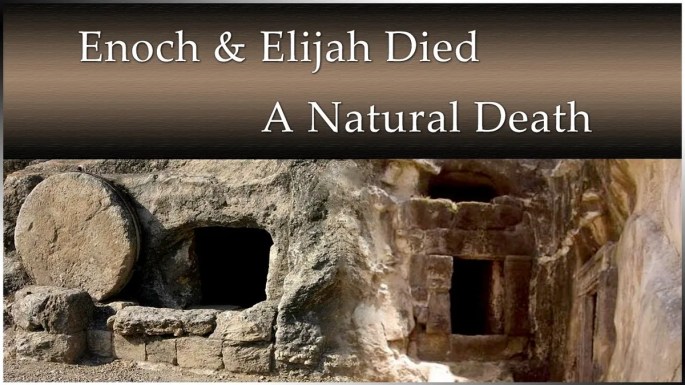
Enoch and Elijah: Where Are They Now?
By Jim Punton and Anthony Buzzard Hebrews 11:5: “By faith Enoch was taken away so that he did not see death, and was not found, because God had taken him; for before he was taken he had this testimony, that he pleased God.” Other heroes of faith are then listed in this hall of fame. … Continue reading Enoch and Elijah: Where Are They Now?
Acts: A Gold Mine of Kingdom Treasures!
by Kenneth LaPrade, Texas Many folks might be motivated to ask a person like me, “Why even bother emphasizing the Gospel of the Kingdom of God repeatedly? After all, we (as Christians) already believe that Jesus died for our sins and was resurrected. Isn’t that the whole Gospel? So what then is the big deal … Continue reading Acts: A Gold Mine of Kingdom Treasures!

Why does Matthew use “the Kingdom of Heaven”?
If we were to look for one single theme that seems to be the most central and most important theme of the entire gospel of Matthew, it would be the theme of the coming of the kingdom. We see in the first instance that the term gospel refers to the gospel of the kingdom — … Continue reading Why does Matthew use “the Kingdom of Heaven”?

Who is the Alpha and Omega in Revelation?
The post will address Revelation 1:17; 2:8; 3:14; 21:6; 22:13 Preface By Raymond This teaching is challenging as it has to address a difficult concepts addressing the complication of Trinitarianism. It creates contradictions and confusion. Furthermore God uses figurative language to convey ideas and concepts for us. One new concept is that there are two … Continue reading Who is the Alpha and Omega in Revelation?
 Living as a Christian in this World