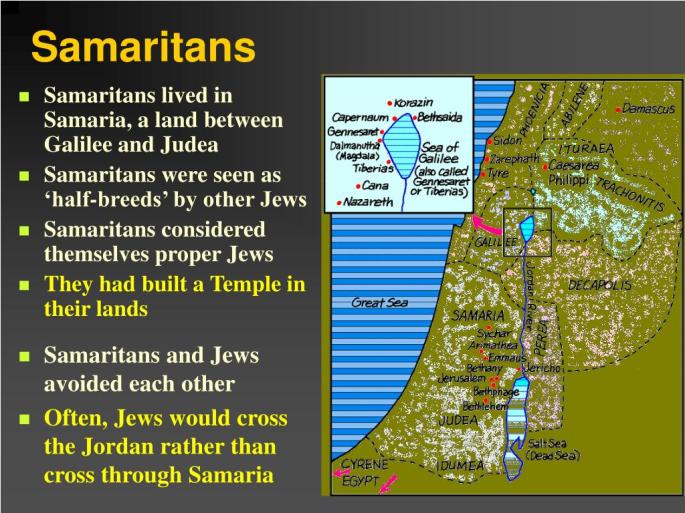
The Samaritans occupied the country formerly belonging to the tribe of Ephraim and the half-tribe of Manasseh. The capital of the country was Samaria, formerly a large and splendid city. When the ten tribes were carried away into captivity to Assyria, the king of Assyria sent people from Cutha, Ava, Hamath, and Sepharvaim to inhabit Samaria (2 Kings … Continue reading Who were the Samaritans?
Author: Raymond
The Rich Man and Lazarus by Edward Fudge
The following has been extracted from Edward Fudge's book Hell: A Final Word Blame it on the King James Version if you wish. The dangling fruit was so beautiful and far too close to resist. Imagine that you are a preacher and you have been requested to present a sermon on hell—“for the young folks,” … Continue reading The Rich Man and Lazarus by Edward Fudge
Shaliah – Jewish Law of Agency
John 17:18 NASB You sent Me into the world, I also have sent them into the world. Sent – The Jewish law of agency, known as shaliah, is crucial for understanding the idea of an apostle. In fact, the verb itself, apostéllō, used here to speak of the mission of Yeshua and the mission of … Continue reading Shaliah – Jewish Law of Agency
Jesus Christ Will Govern from Jerusalem
This post is based on Appendix 3 of the Rev Bible https://www.revisedenglishversion.com/append/3 as it summarises the main scriptures and points that support a future physical Kingdom on earth that ruled by Jesus as His Father as given him all power and authority on earth. Every knee will bow and every tongue will confess that Jesus … Continue reading Jesus Christ Will Govern from Jerusalem
When Was the Book of Revelation Written?
by Wayne Jackson When was the book of Revelation written? Traditionally, the book of Revelation has been dated near the end of the first century, around A.D. 96. Some writers, however, have advanced the preterist (from a Latin word meaning “that which is past”) view, contending that the Apocalypse was penned around A.D. 68 or … Continue reading When Was the Book of Revelation Written?
Let the Dead Bury their Dead
As Jesus would never have told someone not to bury their father (a violation of the commandment to honor your father and mother), the only conclusion is that the man was referring to this "second burial" and why Jesus told him to "let the dead bury their dead."
The Holy Spirit Is Not a Person
The Holy Spirit, from the evidence found in the Bible, is not a person in a supposed Trinity. The Holy Spirit is the very nature, presence and expression of God's power actively working in His servants. Rather than describing the Holy Spirit as a distinct person or entity, the Bible most often refers to it … Continue reading The Holy Spirit Is Not a Person
Detailed look at Lazarus and the Rich man
Many Christians find it difficult to understand Jesus' parable about the rich man and Lazarus. Some believe that it is not a parable but a literal story. It is also supposed to support life after death. The one obvious issue is that the rich man has been judged and sent to Hades. The scriptures state … Continue reading Detailed look at Lazarus and the Rich man
Jewish Encyclopedia statement on Immortality Soul
Immortality of the Soul: http://www.jewishencyclopedia.com/articles/8092-immortality-of-the-soul “The belief that the soul continues its existence after the dissolution of the body is a matter of philosophical or theological speculation rather than of simple faith, and is accordingly nowhere expressly taught in Holy Scripture. As long as the soul was conceived to be merely a breath,1 and inseparably … Continue reading Jewish Encyclopedia statement on Immortality Soul
How many times is “Hell” mentioned in the Bible?
By Michael R. Burch How often does the word "hell" appear in the original Hebrew Bible, which constitutes the Old Testament of the Christian Bible? As the table below demonstrates, according to the consensus opinion of modern Bible scholars, the word "hell" as a place of eternal suffering was never mentioned, not even a single … Continue reading How many times is “Hell” mentioned in the Bible?