“Whoever” Individually versus “The Whole” Collectively

The New Testament contains a common, theologically significant, expression which is incorrectly translated in most English versions. This provides false implications which affect more than one theological point. The expression πᾶς + substantive singular participle is translated either as “whoever believes,” , “whoever is born/begotten” (of God, or of the Spirit), or “whoever loves.” 1. The expression πᾶς ὁ πιστεύων (“whoever believes”) appears in … Continue reading “Whoever” Individually versus “The Whole” Collectively

The “Casting Down of the World” and NOT “Foundation of the World” Part 4

We now turn our attention to the only three passages which use the clause πρὸ καταβολῆς κόσμου, “before the casting down of the world.” All three passages place the Son of God prior to whatever this clause actually meant. All three are significant in determining a correct theology concerning the Son of God, whether He was eternally … Continue reading The “Casting Down of the World” and NOT “Foundation of the World” Part 4

The “Casting Down of the World” and NOT “Foundation of the World” Part 3

The Temporal use of ἀπὸ: In part II of this series, I covered the three passages which contain the clause ἀπὸ καταβολῆς κόσμου in which the preposition ἀπὸ is used causally, meaning “because of the casting down of the world.” In this post I would like to address the remaining four passages which have this clause where the … Continue reading The “Casting Down of the World” and NOT “Foundation of the World” Part 3

The “Casting Down of the World” and Not “Foundation of the World” Part 2

The Causal use of ἀπὸ: In part 1 of this series, I pointed out the awkwardness of the noun καταβολῆς (casting down), allegedly meaning “foundation/founding,” and its use in Hebrews 11:11 the only time it appears in the Bible apart from the clause καταβολῆς κόσμου (casting down of the world). In this post I would like … Continue reading The “Casting Down of the World” and Not “Foundation of the World” Part 2

The “Casting Down of the World” and Not “Foundation of the World” Part 1

Thesis: There is a very important clause that appears ten times in the New Testament but is mistranslated in virtually all English versions. This mistranslation gives cover to certain incorrect doctrines, including Calvinism, Trinitarianism, and Unitarianism. The important clause is καταβολῆς κόσμου (pronounced kata-bol-ace kos-moo). It is wrongly translated “foundation of the world” in virtually all English versions. … Continue reading The “Casting Down of the World” and Not “Foundation of the World” Part 1

Is God’s Spirit is a Person?

The following is an interaction on a Christian forum between two men whose names I have changed. It shows how Greek is quite different to English. In Greek grammar all nouns are categorised into three grammatical genders: masculine, feminine, and neuter. I.e. the word dog is masculine and will be referred to with masculine verbs … Continue reading Is God’s Spirit is a Person?

The Translation of God’s Name from YAHWEH to LORD

One of the most obvious mistranslated, and probably the most common (5321 times), concerns God’s holy Name. In simple terms, instead of transliterating God’s Name, Yahweh, or using its meaning, “I am,” the translators replaced it with the title “LORD.” Some versions use all capitals to differentiate LORD from Lord, but a name is still … Continue reading The Translation of God’s Name from YAHWEH to LORD

Tertullian’s and the Pristine Faith Rule (PFR)

Very early in Church history there arose great controversies as heresies sprung up and attempted to invade the Church. Typically, someone in one of the local churches would come up with a new doctrine, and gain a following. Many such people arose, and were rapidly ejected from the Apostolic churches. But, having gained a following, … Continue reading Tertullian’s and the Pristine Faith Rule (PFR)

Martin Luther – Overview

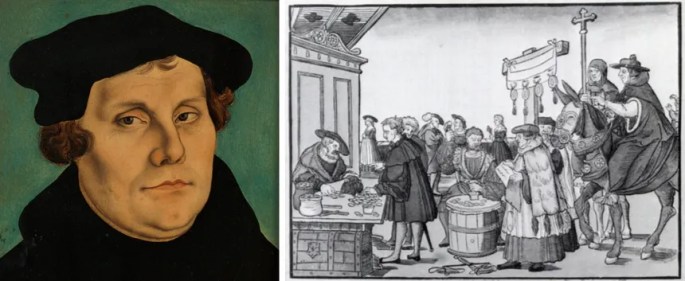
Martin Luther (1483-1546) was a German theologian and a major leader of the Protestant Reformation. He is sometimes called the father of Protestantism, and one of the major branches of "main-line" Protestantism -- Lutheranism -- is named after him. Luther was the son of a Saxon miner. He entered the University of Erfurt when he … Continue reading Martin Luther – Overview

Practical Teaching on Biblical Fasting

These notes have been prepared from teaching by Derek Prince. The following is a practical paper on how to fast. DEFINITION OF FASTING Fasting is abstaining from food for spiritual purposes. (Although there are biblical accounts of people fasting from food AND water, we will consider abstaining from food only.) People can fast together in … Continue reading Practical Teaching on Biblical Fasting