Tertullian’s and the Pristine Faith Rule (PFR)

Very early in Church history there arose great controversies as heresies sprung up and attempted to invade the Church. Typically, someone in one of the local churches would come up with a new doctrine, and gain a following. Many such people arose, and were rapidly ejected from the Apostolic churches. But, having gained a following, … Continue reading Tertullian’s and the Pristine Faith Rule (PFR)

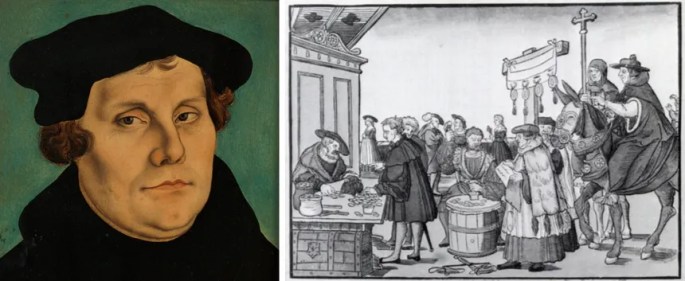
Martin Luther – Overview

Martin Luther (1483-1546) was a German theologian and a major leader of the Protestant Reformation. He is sometimes called the father of Protestantism, and one of the major branches of "main-line" Protestantism -- Lutheranism -- is named after him. Luther was the son of a Saxon miner. He entered the University of Erfurt when he … Continue reading Martin Luther – Overview

Practical Teaching on Biblical Fasting

These notes have been prepared from teaching by Derek Prince. The following is a practical paper on how to fast. DEFINITION OF FASTING Fasting is abstaining from food for spiritual purposes. (Although there are biblical accounts of people fasting from food AND water, we will consider abstaining from food only.) People can fast together in … Continue reading Practical Teaching on Biblical Fasting

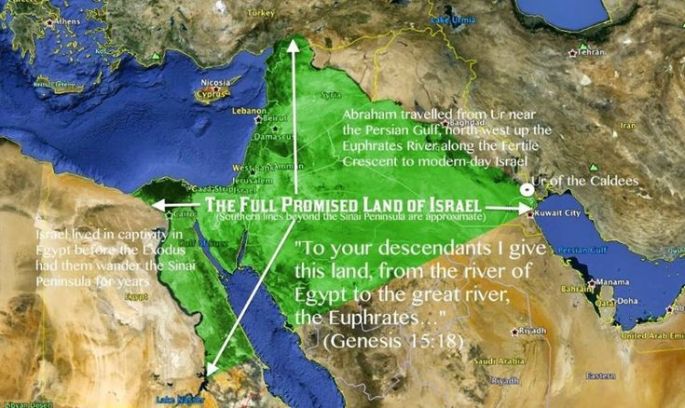
The Abrahamic Inheritance was the Earliest Christian Hope

Throughout the bible we see references to the land being an inheritance for Israel as a grouping. Following are just two important post bible era Church Fathers as they are called statements about fulling the Abrahamic covenant which included a very large piece of land in the middle east. Justin Martyr (AD 100-165) Christian apologist … Continue reading The Abrahamic Inheritance was the Earliest Christian Hope

We Dont Pray to Jesus!

The post explains that prayer should be directed to the Father as Jesus instructed, emphasizing worship of Jesus as the Son of God. It highlights the importance of honoring Jesus as the image of God and the reconciler of humanity, stating worship is directed toward the persons of the Father and Son, not abstract divinity.

A Look at the Hebrew Word Olam

The Hebrew word "olam" signifies a distant time or horizon, often misconstrued as "eternity" in English. It encompasses long durations, but lacks a single equivalent for "eternity" in Classical Hebrew. Various applications of olam reveal its context-dependent meanings, limited to a person's lifetime or specific ages rather than infinite time.

Let the Dead Bury their Dead

As Jesus would never have told someone not to bury their father (a violation of the commandment to honor your father and mother), the only conclusion is that the man was referring to this "second burial" and why Jesus told him to "let the dead bury their dead."

How many times is “Hell” mentioned in the Bible?

By Michael R. Burch How often does the word "hell" appear in the original Hebrew Bible, which constitutes the Old Testament of the Christian Bible? As the table below demonstrates, according to the consensus opinion of modern Bible scholars, the word "hell" as a place of eternal suffering was never mentioned, not even a single … Continue reading How many times is “Hell” mentioned in the Bible?

We all have Theological Filters

By Jeff A. Benner A filter, such as the air filter in your car, is used to block unwanted debris, yet allow air to continue through to the engine. A theological filter works in much the same way, it is a mental filter that blocks unwanted information, yet allows the desired information to continue through to … Continue reading We all have Theological Filters

What is Hebrew chiasm / chiastic / chiasmus structure in the Bible?

A chiasm (also called a chiasmus) is a literary device in which a sequence of ideas is presented and then repeated in reverse order. The result is a “mirror” effect as the ideas are “reflected” back in a passage. Each idea is connected to its “reflection” by a repeated word, often in a related form. The … Continue reading What is Hebrew chiasm / chiastic / chiasmus structure in the Bible?