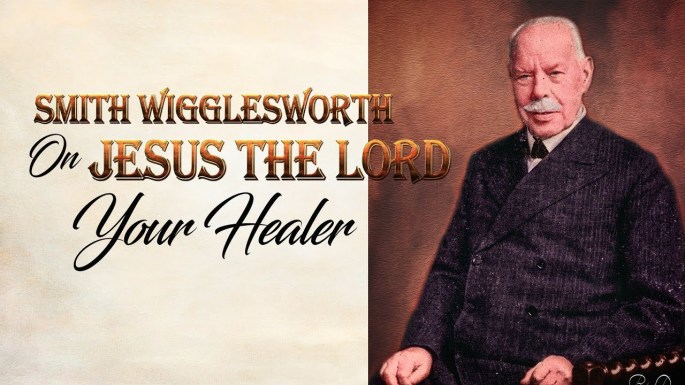
Smith Wigglesworth, known as the Apostle of Faith, was an impactful evangelist who performed miraculous healings and even raised the dead. Born in 1859, he experienced a profound conversion and pursued God relentlessly. His dynamic ministry emphasized faith, purity, and holiness. Wigglesworth's life exemplified godly authority, and he believed in aggressive faith, leaving a legacy that inspires future ministries aimed at revival.
Healing and the Atonement using Key Passages of Scripture
The article by Anthony D. Palma explores the relationship between divine healing and the Atonement through Scripture. It highlights Isaiah 53:4, which indicates that Christ bore our sicknesses and pains. The New Testament quotations affirm this connection, emphasizing healing as part of the redemptive work of Christ. Though the Atonement primarily addresses sin, it also encompasses physical healing, reflecting a holistic salvation for humanity.
Healing in the Atonement
The 53rd chapter of Isaiah emphasizes the sacrifice of Christ, linking spiritual salvation to physical healing. The author argues that Jesus' atonement addresses both sin and sickness, promoting faith as essential for healing. Miracles are accessible to all believers, not just ministers, and divine healing aligns with God's will. The text asserts that sickness is of the devil, and believers must actively resist it while embracing God's healing promises.
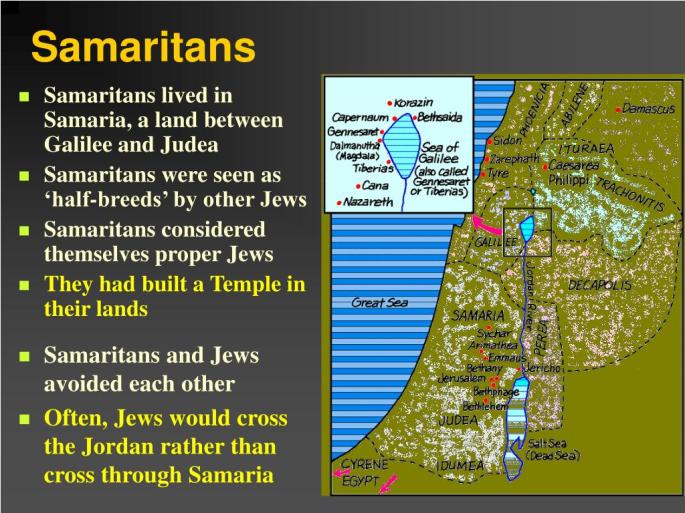
Who were the Samaritans?
The Samaritans occupied the country formerly belonging to the tribe of Ephraim and the half-tribe of Manasseh. The capital of the country was Samaria, formerly a large and splendid city. When the ten tribes were carried away into captivity to Assyria, the king of Assyria sent people from Cutha, Ava, Hamath, and Sepharvaim to inhabit Samaria (2 Kings … Continue reading Who were the Samaritans?
The Rich Man and Lazarus by Edward Fudge
The following has been extracted from Edward Fudge's book Hell: A Final Word Blame it on the King James Version if you wish. The dangling fruit was so beautiful and far too close to resist. Imagine that you are a preacher and you have been requested to present a sermon on hell—“for the young folks,” … Continue reading The Rich Man and Lazarus by Edward Fudge
Shaliah – Jewish Law of Agency
John 17:18 NASB You sent Me into the world, I also have sent them into the world. Sent – The Jewish law of agency, known as shaliah, is crucial for understanding the idea of an apostle. In fact, the verb itself, apostéllō, used here to speak of the mission of Yeshua and the mission of … Continue reading Shaliah – Jewish Law of Agency
Defining Elohim in the Biblical Context
by Paul Sumner hebrew-streams.org The word most often used for God in the Hebrew Bible is Elohim. The word is a topic of frequent theological discussion and defining. But what is often lacking is accurate and detailed information based on the biblical contexts in which the word is found. Elohim Section A — Summary of … Continue reading Defining Elohim in the Biblical Context
Philosophy & Methodology for Understanding Scripture
By Tim WarnerCopyright © The Pristine Faith Restoration Society The Pristine Faith Restoration Society believes that the foundational philosophies for discovering God's truth of the Catholic, Orthodox, and Protestant Churches are all seriously flawed. We realize that every Christian organization and denomination claims to hold to the original Christian Faith. But, with the extensive variety … Continue reading Philosophy & Methodology for Understanding Scripture
Life, Death and Resurrection in the Pauline Epistles
Acts 24:21 unless it is for this one statement which I cried out, standing among them, 'Concerning the resurrection of the dead I am being judged by you this day.' Many verses in Paul's epistles are often cited to prove he taught that man has an immortal soul which would depart upon the death of … Continue reading Life, Death and Resurrection in the Pauline Epistles
“Melchizedek” is the Son of God
Christian interpreters have long been puzzled by the brief mention of Melchizedek in Genesis 14, his one-sentence mention in Psalm 110:4, and by the interpretation of those two texts by Paul in Hebrews 5&7. Most Christian commentators hold that Melchizedek was just a man and that he merely prefigured Christ, being a type or comparative … Continue reading “Melchizedek” is the Son of God