We now turn our attention to the only three passages which use the clause πρὸ καταβολῆς κόσμου, “before the casting down of the world.” All three passages place the Son of God prior to whatever this clause actually meant. All three are significant in determining a correct theology concerning the Son of God, whether He was eternally … Continue reading The “Casting Down of the World” and NOT “Foundation of the World” Part 4
Tag: Greek
The “Casting Down of the World” and NOT “Foundation of the World” Part 3
The Temporal use of ἀπὸ: In part II of this series, I covered the three passages which contain the clause ἀπὸ καταβολῆς κόσμου in which the preposition ἀπὸ is used causally, meaning “because of the casting down of the world.” In this post I would like to address the remaining four passages which have this clause where the … Continue reading The “Casting Down of the World” and NOT “Foundation of the World” Part 3
The “Casting Down of the World” and Not “Foundation of the World” Part 2
The Causal use of ἀπὸ: In part 1 of this series, I pointed out the awkwardness of the noun καταβολῆς (casting down), allegedly meaning “foundation/founding,” and its use in Hebrews 11:11 the only time it appears in the Bible apart from the clause καταβολῆς κόσμου (casting down of the world). In this post I would like … Continue reading The “Casting Down of the World” and Not “Foundation of the World” Part 2
The “Casting Down of the World” and Not “Foundation of the World” Part 1
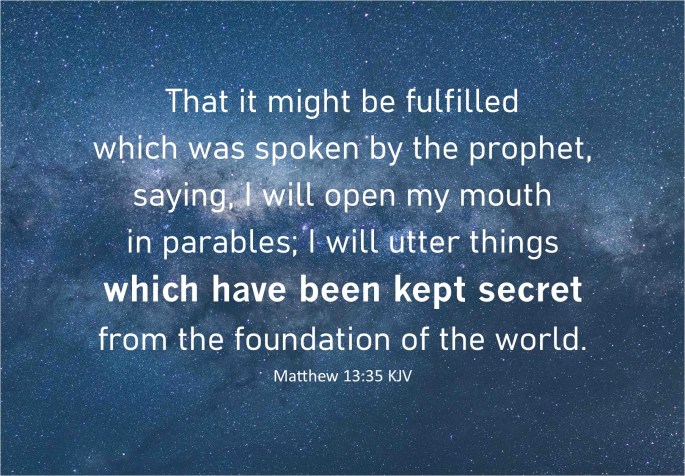
Thesis: There is a very important clause that appears ten times in the New Testament but is mistranslated in virtually all English versions. This mistranslation gives cover to certain incorrect doctrines, including Calvinism, Trinitarianism, and Unitarianism. The important clause is καταβολῆς κόσμου (pronounced kata-bol-ace kos-moo). It is wrongly translated “foundation of the world” in virtually all English versions. … Continue reading The “Casting Down of the World” and Not “Foundation of the World” Part 1
Is God’s Spirit is a Person?
The following is an interaction on a Christian forum between two men whose names I have changed. It shows how Greek is quite different to English. In Greek grammar all nouns are categorised into three grammatical genders: masculine, feminine, and neuter. I.e. the word dog is masculine and will be referred to with masculine verbs … Continue reading Is God’s Spirit is a Person?
How The Greek word Hades Changed Our Understanding of What happens when we Die
The teaching presented argues that upon death, individuals do not enter heaven or hell, challenging common beliefs rooted in Greek mythology and translation errors. The confusion stems from translating the Hebrew word Sheol to Greek Hadēs, leading to misconceptions about the state of the dead, affecting both Judaism and Christianity.
Did You Know That Ancient Greek Did Not Have Punctuation?
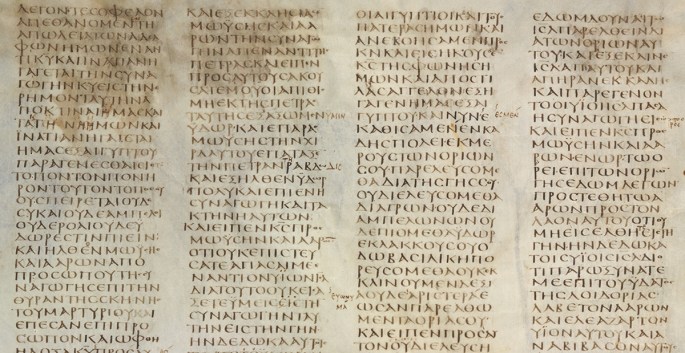
Ancient Greek, particularly during the New Testament period, lacked a formal punctuation system and spaces between words. Written in capital letters, texts relied on reader comprehension. The introduction of punctuation occurred centuries later, leading to varied interpretations in translations, which reflects translators' biases in rendering biblical texts with modern punctuation conventions.
Notes on the Septuagint
The document explores the significance of the Septuagint (LXX) as a key biblical text, analyzing its historical context, its role in early Christianity, and discrepancies with the Masoretic text. It emphasizes the New Testament's reliance on the LXX, suggesting reconsideration of translation standards from Hebrew to English based on this evidence.
How Greek thought Corrupted Christian Theology!
In the post, “Early Christians Had a Great Hope” we provided many quotes from the earliest Christian apologists – martyrs describing the Christian hope handed down to the early Christians by the Apostles. It was not an eternal destiny in heaven, but the resurrection of the physical body and an eternal inheritance in the Land God promised … Continue reading How Greek thought Corrupted Christian Theology!
Greek Philosophy’s Impact on our Understanding of Death
Much has been written on the subject of death, primarily because so many Christians have been led to believe that we don't really die but go on to live with Jesus in Heaven. In John W. Schoenheit's book "The Christian's Hope,*" chapter 7, The Origin of Orthodoxy he says, The vast majority of Christian denominations … Continue reading Greek Philosophy’s Impact on our Understanding of Death