The “Casting Down of the World” and NOT “Foundation of the World” Part 4

We now turn our attention to the only three passages which use the clause πρὸ καταβολῆς κόσμου, “before the casting down of the world.” All three passages place the Son of God prior to whatever this clause actually meant. All three are significant in determining a correct theology concerning the Son of God, whether He was eternally … Continue reading The “Casting Down of the World” and NOT “Foundation of the World” Part 4

The “Casting Down of the World” and NOT “Foundation of the World” Part 3

The Temporal use of ἀπὸ: In part II of this series, I covered the three passages which contain the clause ἀπὸ καταβολῆς κόσμου in which the preposition ἀπὸ is used causally, meaning “because of the casting down of the world.” In this post I would like to address the remaining four passages which have this clause where the … Continue reading The “Casting Down of the World” and NOT “Foundation of the World” Part 3

The “Casting Down of the World” and Not “Foundation of the World” Part 2

The Causal use of ἀπὸ: In part 1 of this series, I pointed out the awkwardness of the noun καταβολῆς (casting down), allegedly meaning “foundation/founding,” and its use in Hebrews 11:11 the only time it appears in the Bible apart from the clause καταβολῆς κόσμου (casting down of the world). In this post I would like … Continue reading The “Casting Down of the World” and Not “Foundation of the World” Part 2

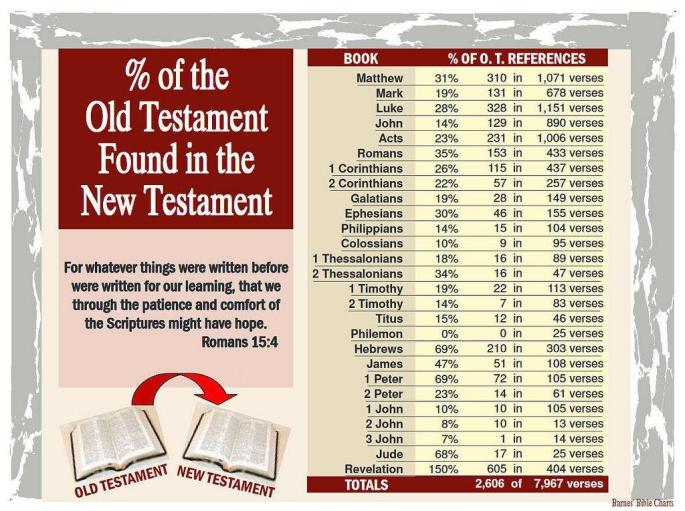
Table of Old Testament quotes in the New Testament

The following is a table of New Testament (NT) quotations of the Old Testament (OT). The left column carries the NT citations, the middle the Septuagint (LXX) and the last column the Masoretic (MT). The NT and MT traslation is the Authorized Version, the LXX, Brenton's. All obvious quotes have been included; it excludes strong … Continue reading Table of Old Testament quotes in the New Testament

The Abrahamic Inheritance was the Earliest Christian Hope

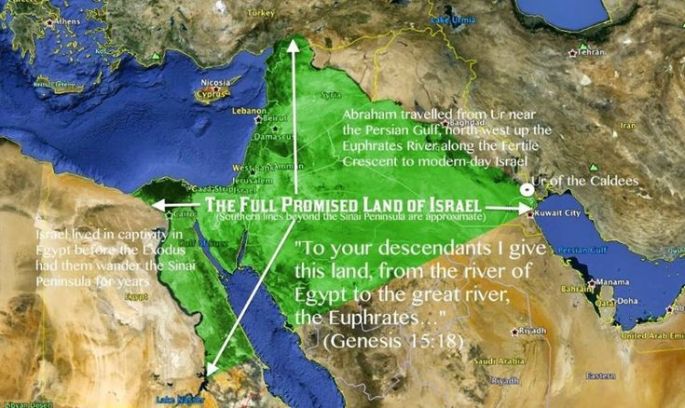
Throughout the bible we see references to the land being an inheritance for Israel as a grouping. Following are just two important post bible era Church Fathers as they are called statements about fulling the Abrahamic covenant which included a very large piece of land in the middle east. Justin Martyr (AD 100-165) Christian apologist … Continue reading The Abrahamic Inheritance was the Earliest Christian Hope

We Dont Pray to Jesus!

The post explains that prayer should be directed to the Father as Jesus instructed, emphasizing worship of Jesus as the Son of God. It highlights the importance of honoring Jesus as the image of God and the reconciler of humanity, stating worship is directed toward the persons of the Father and Son, not abstract divinity.

How The Greek word Hades Changed Our Understanding of What happens when we Die

The teaching presented argues that upon death, individuals do not enter heaven or hell, challenging common beliefs rooted in Greek mythology and translation errors. The confusion stems from translating the Hebrew word Sheol to Greek Hadēs, leading to misconceptions about the state of the dead, affecting both Judaism and Christianity.

Paul and the UNKNOWN God shows that God is Not a Trinity

In Acts, Paul differentiates between God and Jesus, emphasizing that God is a singular entity. He identifies Jesus solely as a man, reinforcing his argument with personal pronouns. Paul’s message asserts that God will judge the world through Jesus, contrasting with beliefs of a multi-person God.

A Look at the Hebrew Word Olam

The Hebrew word "olam" signifies a distant time or horizon, often misconstrued as "eternity" in English. It encompasses long durations, but lacks a single equivalent for "eternity" in Classical Hebrew. Various applications of olam reveal its context-dependent meanings, limited to a person's lifetime or specific ages rather than infinite time.

Healing and the Atonement using Key Passages of Scripture

The article by Anthony D. Palma explores the relationship between divine healing and the Atonement through Scripture. It highlights Isaiah 53:4, which indicates that Christ bore our sicknesses and pains. The New Testament quotations affirm this connection, emphasizing healing as part of the redemptive work of Christ. Though the Atonement primarily addresses sin, it also encompasses physical healing, reflecting a holistic salvation for humanity.