The New Testament contains a common, theologically significant, expression which is incorrectly translated in most English versions. This provides false implications which affect more than one theological point. The expression πᾶς + substantive singular participle is translated either as “whoever believes,” , “whoever is born/begotten” (of God, or of the Spirit), or “whoever loves.” 1. The expression πᾶς ὁ πιστεύων (“whoever believes”) appears in … Continue reading “Whoever” Individually versus “The Whole” Collectively
Tag: God
Is God’s Spirit is a Person?
The following is an interaction on a Christian forum between two men whose names I have changed. It shows how Greek is quite different to English. In Greek grammar all nouns are categorised into three grammatical genders: masculine, feminine, and neuter. I.e. the word dog is masculine and will be referred to with masculine verbs … Continue reading Is God’s Spirit is a Person?
Elohim One God?
Yahweh is referred to as Elohim in the first sentence of the first page of the first book of the Bible. "In the beginning God [Elohim] created the heavens of the earth" (Genesis 1:1). IN fact, Yahweh is the Elohim of elohim – the God of gods (Deuteronomy 10:17; Joshua 22:22; Psalms 136:2). He is … Continue reading Elohim One God?
We Dont Pray to Jesus!
The post explains that prayer should be directed to the Father as Jesus instructed, emphasizing worship of Jesus as the Son of God. It highlights the importance of honoring Jesus as the image of God and the reconciler of humanity, stating worship is directed toward the persons of the Father and Son, not abstract divinity.
How The Greek word Hades Changed Our Understanding of What happens when we Die
The teaching presented argues that upon death, individuals do not enter heaven or hell, challenging common beliefs rooted in Greek mythology and translation errors. The confusion stems from translating the Hebrew word Sheol to Greek Hadēs, leading to misconceptions about the state of the dead, affecting both Judaism and Christianity.
Paul and the UNKNOWN God shows that God is Not a Trinity
In Acts, Paul differentiates between God and Jesus, emphasizing that God is a singular entity. He identifies Jesus solely as a man, reinforcing his argument with personal pronouns. Paul’s message asserts that God will judge the world through Jesus, contrasting with beliefs of a multi-person God.
A Look at the Hebrew Word Olam
The Hebrew word "olam" signifies a distant time or horizon, often misconstrued as "eternity" in English. It encompasses long durations, but lacks a single equivalent for "eternity" in Classical Hebrew. Various applications of olam reveal its context-dependent meanings, limited to a person's lifetime or specific ages rather than infinite time.
Did You Know That Ancient Greek Did Not Have Punctuation?
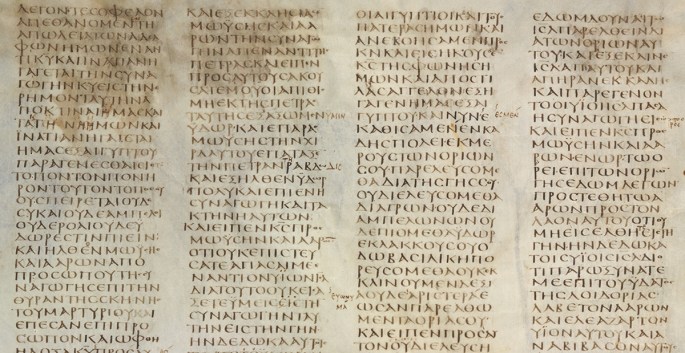
Ancient Greek, particularly during the New Testament period, lacked a formal punctuation system and spaces between words. Written in capital letters, texts relied on reader comprehension. The introduction of punctuation occurred centuries later, leading to varied interpretations in translations, which reflects translators' biases in rendering biblical texts with modern punctuation conventions.
Healing and the Atonement using Key Passages of Scripture
The article by Anthony D. Palma explores the relationship between divine healing and the Atonement through Scripture. It highlights Isaiah 53:4, which indicates that Christ bore our sicknesses and pains. The New Testament quotations affirm this connection, emphasizing healing as part of the redemptive work of Christ. Though the Atonement primarily addresses sin, it also encompasses physical healing, reflecting a holistic salvation for humanity.
Defining Elohim in the Biblical Context
by Paul Sumner hebrew-streams.org The word most often used for God in the Hebrew Bible is Elohim. The word is a topic of frequent theological discussion and defining. But what is often lacking is accurate and detailed information based on the biblical contexts in which the word is found. Elohim Section A — Summary of … Continue reading Defining Elohim in the Biblical Context